
English Русский
Български
Беларускі
Український
Српски
Hrvatski
Română
Polski
Slovenský
Magyar
Bookmark Articles Sitemap Contacts
Company Hyundai Company Opel Company Skoda Company Kia Company Mitsubishi Company LADA Company Audi
PeugeotBook.ru


Series 100   Series 200   Series 300   400-500   Series 600   Crossovers   Others
 
Peugeot 206 (1998-2012) Peugeot 207 (2006-2014)

Draining and filling coolant (Peugeot 206)

  • Main
  • 20X
  • Peugeot 206 (1998-2012)
  • Power unit
  • Diesel engines
  • Draining and filling coolant
0
Peugeot service centers use a special cylinder 0173/2 for filling with coolant.

Drain the coolant in the following order:
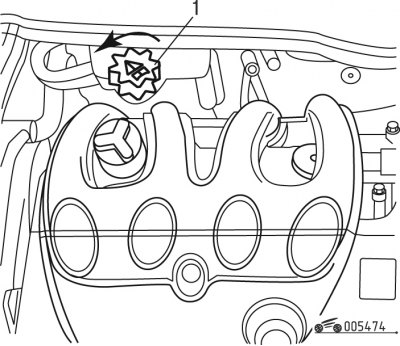
Figure 4.74. Removing the plug from the expansion tank of the cooling system: 1 - cork

Figure 4.74. Removing the plug from the expansion tank of the cooling system: 1 - cork

  • unscrew plug 1 (figure 4.74) expansion tank;
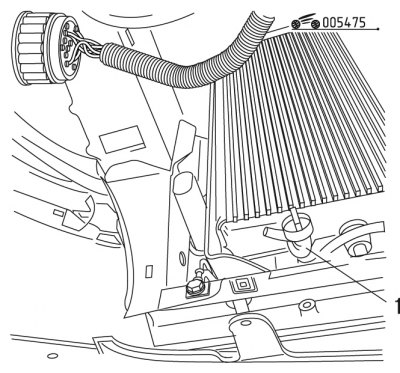
Figure 4.75. Radiator drain plug: 1 - cork

Figure 4.75. Radiator drain plug: 1 - cork

  • unscrew plug 1 (figure 4.75) radiator drain hole;

Note: Place a piece of hose over the drain hole to prevent liquid from splashing out of the system.
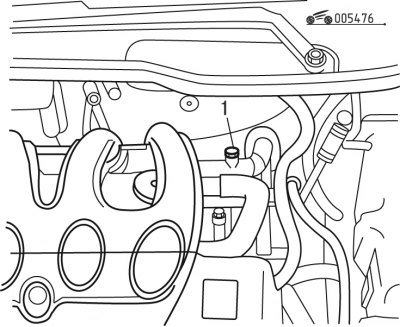

Figure 4.76. Cooling system plug: 1 - plug

Figure 4.76. Cooling system plug: 1 - plug


View the original on the website (www.PEUGEOTBOOK.ru)
  • unscrew plug 1 (figure 4.76) cooling system drain hole;
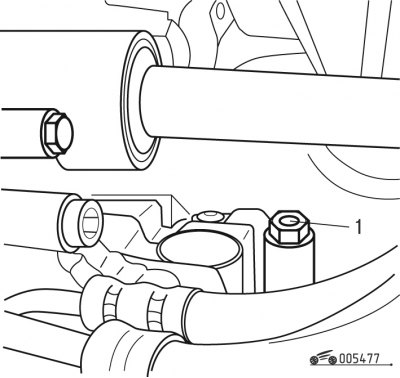
Figure 4.77. Cooling system plug: 1 - cork

Figure 4.77. Cooling system plug: 1 - cork

  • unscrew plug 1 (figure 4.77) and drain the coolant from the engine cooling system.

Fill the cooling system and remove air from it in the following order:
  • before filling the system with coolant, flush it with clean fresh water;
  • check the engine cooling system for leaks;
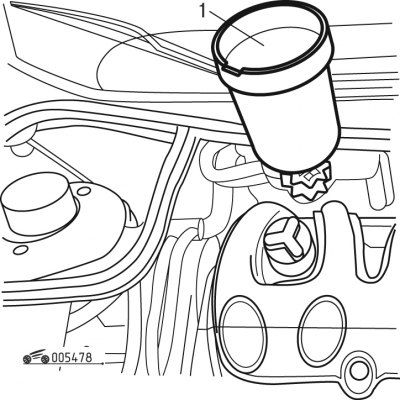
Figure 4.78. Filling the engine cooling system: 1 - cylinder for filling with coolant

Figure 4.78. Filling the engine cooling system: 1 - cylinder for filling with coolant

  • install cylinder 1 on the filler neck of the expansion tank (figure 4.78) for filling with coolant;
  • unscrew all the plugs of the cooling system drain holes;
  • slowly begin to pour coolant into the cooling system;
  • successively close the drain holes with plugs as the coolant flows through them without air bubbles;
  • the coolant filling cylinder must be filled to the 1L mark to ensure proper bleeding of the system;
  • start the engine;
  • stabilize the crankshaft speed from 1500 to 2000 min⁻¹ until the end of the second cooling cycle (turning on and then off the engine cooling fans), maintaining the filling of the cylinder, creating excess pressure in the system;
  • stop the engine;
  • remove cylinder 1 (see figure 4.78) for filling with coolant;
  • close the cap on the tank as quickly as possible to remove air bubbles;
  • if necessary, top up the coolant level to the maximum mark when the engine is cold.
This article is available at russian, bulgarian, belarusian, ukrainian, serbian, croatian, romanian, polish, slovak, hungarian
Article reviewed by editor: Matveev Demid
Share information:
Previous
Peugeot 206: Diesel engines
Next

Removal and installation the camshaft
Timing Belt Replacement
Timing mechanism (GRM) — general information
DW8 Engine Auxiliary Drive Belt
Connecting rod and piston group — design description
Removal and installation the radiator support and fan motor unit
Recommended motor oils and their volumes
Draining oil using a vacuum pump
Exhaust gas recirculation system
Engine Exhaust Gas Recirculation Valve DW10 TD
See similar information for other Peugeot models

➨ Coolant renewal Peugeot 106 (1991-2003)
➨ Draining and filling coolant Peugeot 306 (1993-2002)
➨ Draining the coolant Peugeot 405 (1987-1997)
➨ Coolant Temperature Sensor — Removal and Installation Peugeot 605 (1989-2000)
➨ Coolant — draining and filling Peugeot 806 (1994-2002)
Link to this article in different formats
Comments and feedback from visitors
No comments yet


Add two numbers 20 + 44


Peugeot 207 (2006-2014) 
  • General information
  • Car care
  • Governing bodies
  • Driving and operation
  • Power unit
  • Engine characteristics
  • Engine repair
  • Cooling system
  • Lubrication system
  • Ignition system
  • Control system (gasoline)
  • Fuel system (gasoline)
  • Control system (diesel)
  • Transmission
  • Clutch
  • Mechanical gearbox
  • Automatic gearbox
  • Drive shafts
  • Chassis, running gear
  • Car suspension
  • Steering
  • Brake system
  • Body and interior
  • Exterior (external elements)
  • Interior (internal elements)
  • Heating and air conditioning
  • Electrical equipment
  • Equipment and devices
  • Headlights and lighting
  • Power devices
  • Electrical circuits
Peugeot 206 (1998-2012) 
  • General information
  • User manual
  • Maintenance
  • Power unit
  • Gasoline engines
  • Diesel engines
  • Diesel power system
  • Engine management system
  • Transmission
  • Clutch
  • Mechanical gearbox
  • Automatic gearbox
  • Drive shafts
  • Chassis, running gear
  • Front suspension
  • Rear suspension
  • Steering
  • Brake system
  • Body and interior
  • Body elements
  • Doors, locks and windows
  • Electrical equipment
  • Equipment and devices
  • Electrical circuits
PeugeotBook.ru © 2018–2026 | Mobile version | Sitemap: EN BG BY UA RS HR RO PL SK HU | Write message | Site search | Add to bookmarks | Peugeot owners
106 (1991-2003) | 206 (1998-2012) | 207 (2006-2014) | 305 (1977-1989) | 306 (1993-2002) | 307 (2001-2008) | 405 (1987-1997) | 406 (1995-2004) | 605 (1989-2000) | Partner-I (1996-2008) | Eurovans-807 (2002-2014) | Eurovans-806 (1994-2002) | J5 (1981-1993) |
Cookies are used to ensure the correct display of pages on the site.