



2. Inspect all fittings for signs of leaks and move on to the brake hoses. The latest models have reinforced hoses, so check that the wire braiding is not defective, which could cause damage to the hose itself. Inspect the hoses for abrasion, cracks, cuts, and signs of leaks.
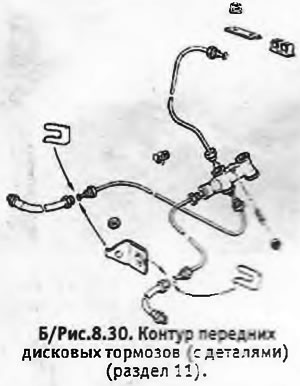 |
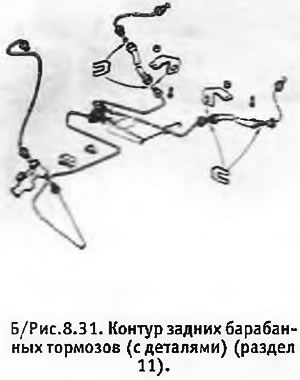 |
3. Inspect the brake lines. They should be cleaned with a pipe and inspected for dents, abrasion and corrosion. Minor corrosion is normal, but in severe cases it can lead to leaks. Heavily corroded pipes must be replaced. Tube damage is especially likely in areas under the car and along the rear control arms where the tubes are most exposed to the elements.
4. If it is necessary to disconnect the fitting (for example, to replace a hose), the brake reservoir opening should be sealed as indicated in section 6, paragraph 1). This will minimize the loss of brake fluid.
5. On older cars, you may have difficulty replacing brake lines. An open-end or adjustable wrench is best for loosening the fittings. To prevent the tubes from turning when connecting or disconnecting, use two keys: one for operation and the other for holding the tube.
6. Brake hoses are usually connected to brake pipes on rigid support brackets. When disconnecting the hose from the tube, you will also need two keys. If you encounter a problem where the connection point is rusted, you need to cover it with penetrating oil and leave it like that for a while.
7. After removing the brake hose, it can be checked from the inside. Blow out the hose with compressed air and look through it to the light. Any foreign objects in the hose indicate damage to the inner lining and the need to replace the hose.
8. Replacement brake pipes can be purchased ready-made or ordered from a workshop. In this case, you will need an old tube as a sample.
9. Installation of the tubes is carried out in reverse order. Try not to bend the tubes yourself - this work should be done by a specialist with special equipment. Before installing new tubes, they should be blown out with compressed air.
10. After installing the tubes and tightening the fittings, remove the polyethylene film or plug with the sealed ventilation hole from the opening of the reservoir and bleed the brake system (see section 3).
Source available on the website: peugeotbook.ru