



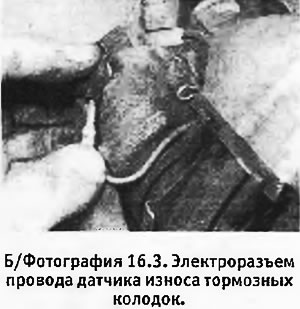
2. If necessary, remove some fluid from the brake reservoir using a clean syringe. If this is not done, there is a risk that liquid may splash out of the tank during subsequent operations.
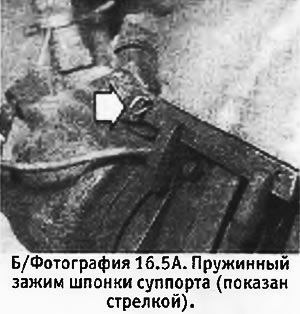
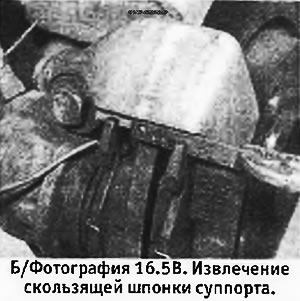
3. Remove the spring clip securing the caliper sliding key. Remove the key from the caliper (see photo).
 |
 |
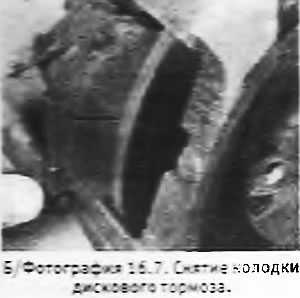
4. Using a large pry bar, push the caliper cylinder toward the disc, using the shock absorber as a fulcrum. Pull out the outer shoe.
5. Move the caliper back towards the car's axle and remove the inner pad (see photo).
6. Inspect the caliper for signs of leaks and check that the cylinder can slide freely. Inspect the brake disc for wear and damage.
7. If at least one pad no longer has a visible groove running down the center of the friction side of the pad, all 4 pads must be replaced.
8. Clean the caliper inside and out with a dry paintbrush and wipe with a damp cloth, being careful not to inhale any dust that rises.
9. Using a blunt tool, push the piston all the way into the cylinder.
10. Coat the lower slide of the caliper with a special anti-seize compound for disc brakes. Install the inner and outer pads, moving the cylinder and caliper as necessary. Connect the brake pad wear sensor wiring.
11. Press the pads down and secure them with a key. Secure the key in place with a new clamp.
12. Repeat the entire procedure on the second front brake, reinstall the wheels and lower the car to the ground. Tighten the wheel nuts or bolts to the specified torque.
13. Add brake fluid to the reservoir and, with the engine running, press the brake pedal several times to position the pads on the disc. Once completed, add fluid to the reservoir again (as needed).
14. Remember that new brake pads need to be broken in, so at first you should drive carefully and avoid braking at high speed. Peugeot branded brake pads have a thin abrasive coating on the friction surface to remove minor defects from the discs. When using these pads, the manufacturer's instructions must be strictly followed.
The source is located on the website: PeugeotBook