English Русский
Български
Беларускі
Український
Српски
Hrvatski
Română
Polski
Slovenský
Magyar
Bookmark Articles Sitemap Contacts
Company Hyundai Company Opel Company Skoda Company Kia Company Mitsubishi Company LADA Company Audi
PeugeotBook.ru


Series 100   Series 200   Series 300   400-500   Series 600   Crossovers   Others
 
Peugeot 305 (1977-1989) Peugeot 306 (1993-2002) Peugeot 307 (2001-2008)

Fuses — location and purpose (Peugeot 305)

  • Main
  • 30X
  • Peugeot 305 (1977-1989)
  • Electrical equipment
  • Equipment and devices
  • Fuses — location and purpose
0
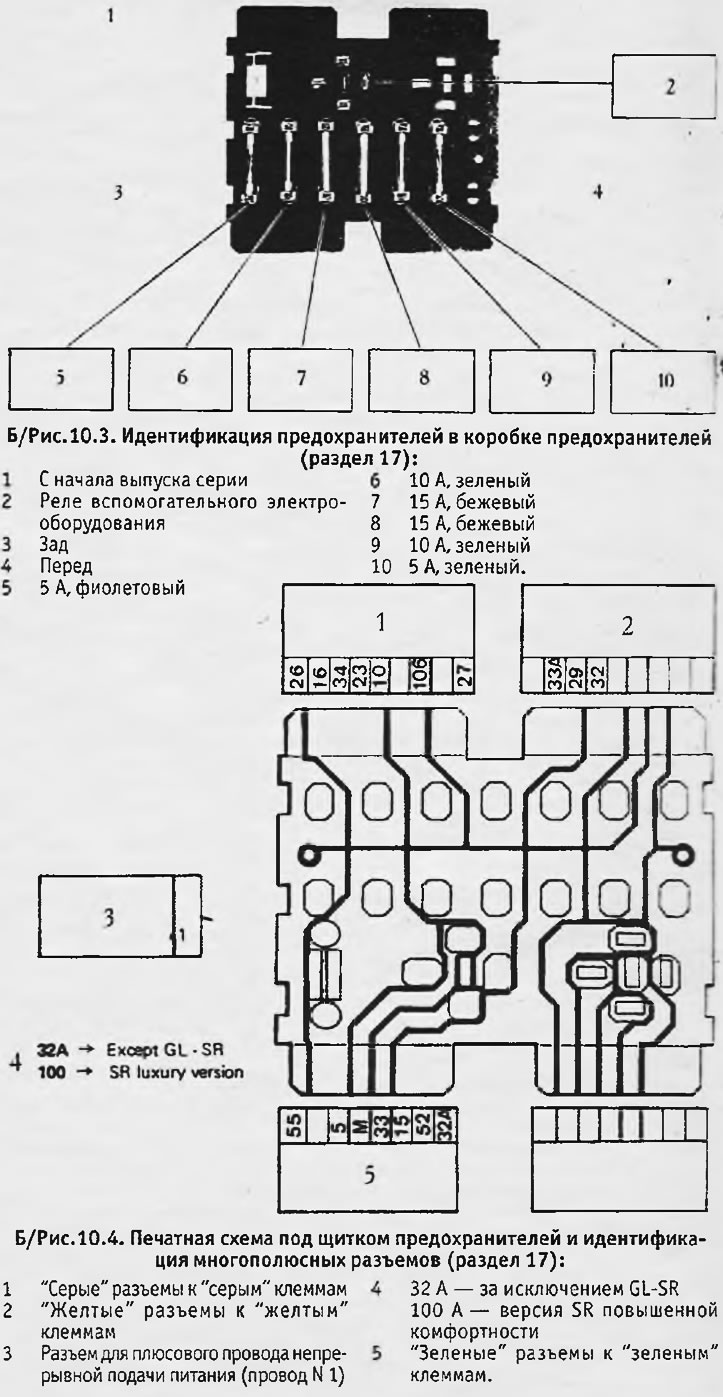
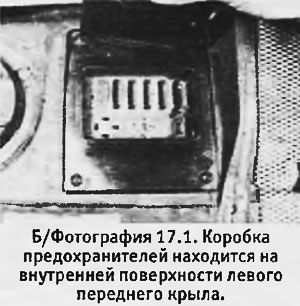
1. The fuse box with a removable cover is located in the engine compartment on the inner surface of the left front fender (see photo).

1. The fuse box with a removable cover is located in the engine compartment on the inner surface of…


2. The box has 7 fuse positions, numbered from front to back. The first position is not used. The second is only used on models with rear fog lights. The remaining fuses (NN 3-7) are responsible for the following circuits (variations may occur depending on the model):

Fuse NDenominationChains
25 ARear fog lights (if installed)
310 AReversing lights; Electromagnetic cooling fan; Brake lights
415 AInterior heater; Windshield wiper and washer; Direction indicators; Instrument panel warning lights; Fuel level indicator; Coolant temperature gauge; Electric front windows (if installed); Additional electrical equipment
515 ARear window defroster; Watch
610 ACigarette lighter; Interior lighting that comes on when doors are opened; Sound signal; Emergency alarm system
75 AFront and rear parking lights; Instrument panel lighting; Rear license plate light

Fuses — location and purpose


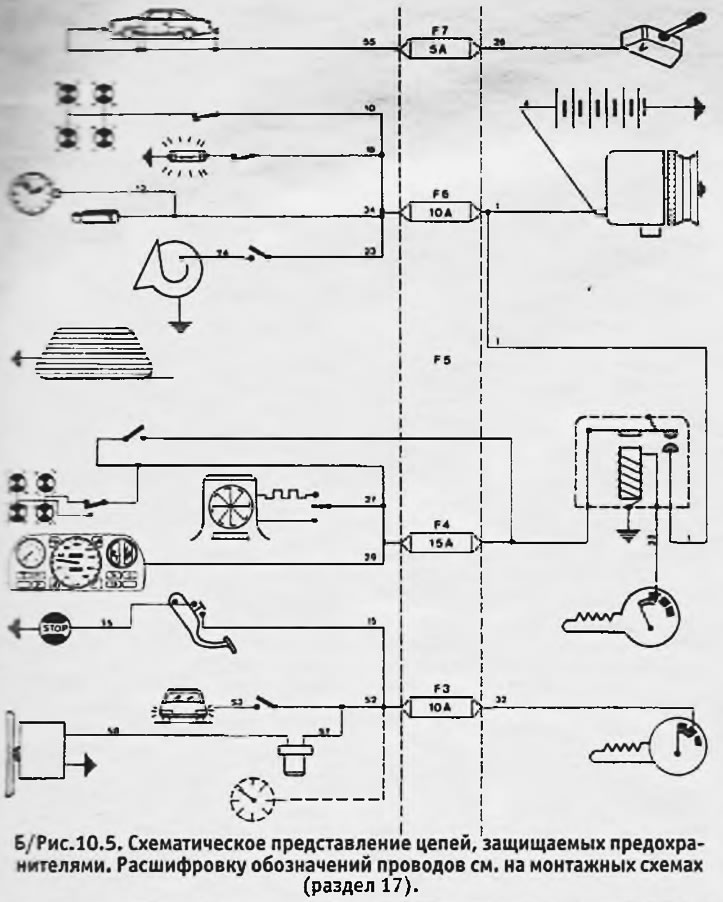
3. In the wiring diagrams below, the fuses are designated as F1, F2, F3, etc.


3. In the wiring diagrams below, the fuses are designated as F1, F2, F3, etc.


Fuses and relays on models produced since 1983.


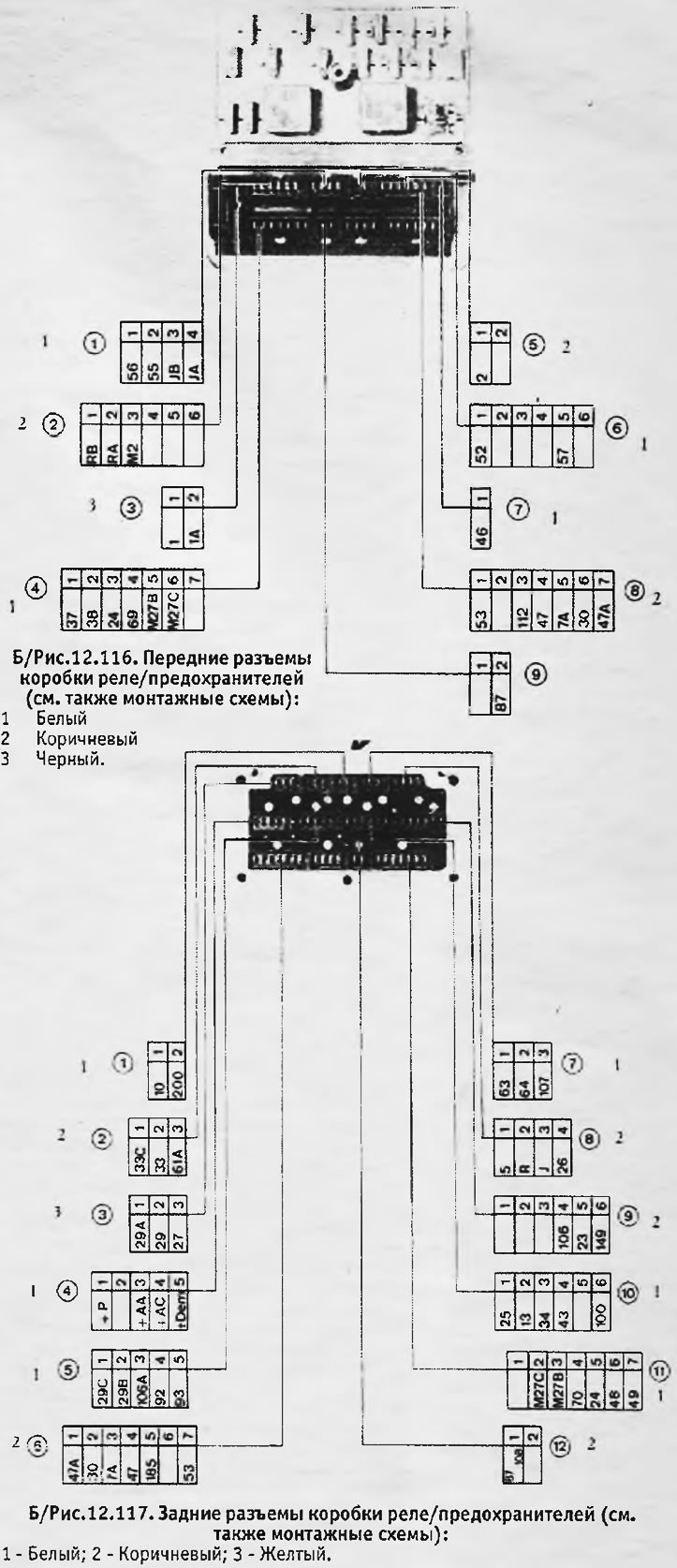
1. On the latest models, the relay/fuse box is noticeably more complex than on the earlier ones (see B/Figure 12.116 and 12.117).
1. On the latest models, the relay/fuse box is noticeably more complex than on the earlier ones…


2. The circuits protected by fuses are indicated in Specifications. A working fuse will have a fusible thread visible inside it, while a blown fuse will have no thread (see photo).
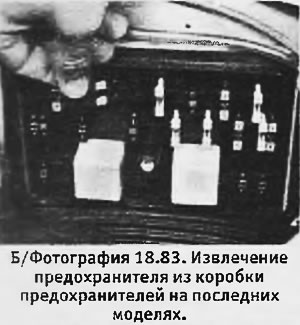
2. The circuits protected by fuses are indicated in Specifications. A working fuse will have a…


3. Two relays located in the box serve the auxiliary electrical equipment and the rear window heater.
This article is available at russian, bulgarian, belarusian, ukrainian, serbian, croatian, romanian, polish, slovak, hungarian
Article reviewed by editor: Ostrovsky Fedor
Share information:
Previous
Peugeot 305: Equipment and devices
Next

General description of electrical equipment
Electrical equipment specification
Removal and installation the rear window wiper motor (Estate…
Removal and installation the rear window washer nozzle (Estate…
Instrument panel — removal and installation
Removal and installation of the instrument panel on models…
Low Oil Warning System (1985 Models) Description
See similar information for other Peugeot models

➨ Component location — diesel models Peugeot 106 (1991-2003)
➨ Fuses — location and replacement Peugeot 206 (1998-2012)
➨ List of fuses Peugeot 406 (1995-2004)
➨ Fuses — General Information Peugeot 605 (1989-2000)
➨ Location of symbols on electrical diagrams Peugeot 806 (1994-2002)
Link to this article in different formats
Comments and feedback from visitors
No comments yet


Add two numbers 30 + 44


Peugeot 307 (2001-2008) 
  • User manual
  • Keys, doors and alarm
  • Controls and instruments
  • Driving and operation
  • Maintenance
  • Power unit
  • Petrol engines TU3 and TU5
  • Petrol engines EW10
  • Diesel engines DV10
  • Diesel engines DW10
  • Transmission
  • Clutch and drive shafts
  • Mechanical gearbox
  • Automatic gearbox
  • Chassis, running gear
  • Front suspension
  • Rear suspension
  • Steering
  • Brake system
  • Body and interior
  • Exterior (external elements)
  • Interior (internal elements)
  • Doors, locks and windows
  • Heating and air conditioning
  • Electrical equipment
  • Equipment and devices
  • Power devices
  • Airbags
  • Electrical circuits
Peugeot 306 (1993-2002) 
  • General information
  • Introduction to manual
  • Specifications
  • Gasoline engine
  • Engine repair
  • Lubrication system
  • Cooling system
  • Fuel injection
  • Ignition system
  • Diesel engine
  • Engine repair
  • Lubrication system
  • Cooling system
  • Fuel injection
  • Transmission
  • Clutch
  • Gearbox
  • Drive shafts
  • Chassis, running gear
  • Steering system
  • Front suspension
  • Rear suspension
  • Brake system
  • Electrical equipment
  • Power devices
  • Electrical circuits
Peugeot 305 (1977-1989) 
  • General information
  • Maintenance
  • Power unit
  • Gasoline engines
  • Diesel engines
  • Cooling system (gasoline)
  • Cooling system (diesel)
  • Fuel system (gasoline)
  • Fuel system (diesel)
  • Ignition system
  • Transmission
  • Clutch
  • Mechanical gearbox BB8
  • Mechanical gearbox BE1
  • Automatic gearbox ZF4
  • Shafts, hubs and wheels
  • Chassis, running gear
  • Brake system
  • Car suspension
  • Steering
  • Body and interior
  • Exterior (external elements)
  • Interior (internal elements)
  • Electrical equipment
  • Equipment and devices
  • Headlights and lighting
  • Power devices
  • Electrical circuits
  • Wiring diagrams (diesel)
PeugeotBook.ru © 2018–2026 | Mobile version | Sitemap: EN BG BY UA RS HR RO PL SK HU | Write message | Site search | Add to bookmarks | Peugeot owners
106 (1991-2003) | 206 (1998-2012) | 207 (2006-2014) | 305 (1977-1989) | 306 (1993-2002) | 307 (2001-2008) | 405 (1987-1997) | 406 (1995-2004) | 605 (1989-2000) | Partner-I (1996-2008) | Eurovans-807 (2002-2014) | Eurovans-806 (1994-2002) | J5 (1981-1993) |
Cookies are used to ensure the correct display of pages on the site.