



2. To remove the rear hub, loosen the wheel nuts on the desired rear wheel. Engage 1st gear and lock the front wheels. Jack up and support the rear of the car so that the rear wheels do not touch the ground. Remove the wheel nuts and the wheel from the desired side. Remove the hub cap. Remove the 2 countersunk head screws securing the brake drum and remove the drum (see chapter 8, section 7). Be careful not to inhale dust from the brakes. If the brake pads are oily or have traces of brake fluid, they should be replaced (see chapter 8).
3. Unscrew the hub nut (you will need a new one when assembling). Remove the thrust washer from the steering knuckle. Remove the hub. Remove the seal located at the rear of the hub and remove the sealing ring from the mounting flange onto which the bearing cap is placed.
4. Remove the outer and inner bearings from the hub (if it hasn't already been done) and mark them so that they can be installed exactly in their original position (if you don't plan to replace them). Thoroughly clean the bearings and their rings and inspect them for wear and signs of overheating (discolored spots) and other defects. If any such defects are detected, the bearings must be replaced.
5. Bearing rings are removed only if they need to be replaced. Carefully knock them out with the help of suitable beards. Before installing new rings, it is necessary to clean their seats in the hub. Each bearing forms a carefully matched set with its outer ring, and they must only be replaced together. Do not remove grease from new bearings before installing them. The bearings can be pressed into place using a long bolt with 2 thrust washers or a suitable socket head. Check that the bearing rings are fully inserted into place.
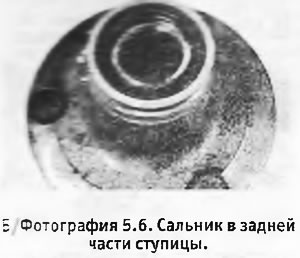
6. After installing the outer bearing rings, thoroughly lubricate the inner bearing with universal grease and install it into the hub. Install the new seal with the sponge facing inward so that the outer surface is flush with the hub rim. Wipe off excess grease from the hub (see photo).
7. Before installing the hub, install the outer bearing on the cleaned journal and check that it slides easily on it. If this is not the case, carefully sand the surface of the journal to achieve a sliding fit for the bearing. Carefully remove all traces of abrasive material from the journal (see photo).
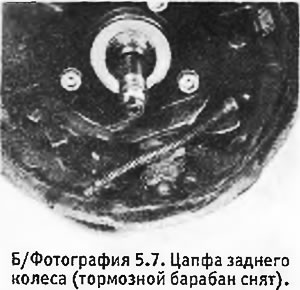
8. Screw the new hub nut onto the stub axle thread to check that it goes in without much resistance. If the nut gets stuck, process the threads on the journal as necessary.
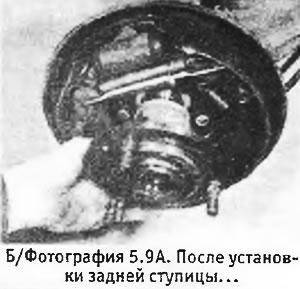
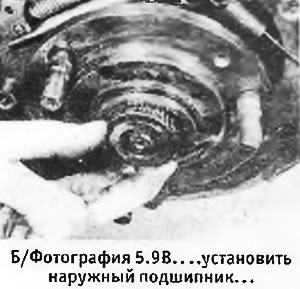
9. After making sure that everything is in order, install the hub and seat it in place. Place at least 80 g of universal grease into the bore in the hub. Install the lubricated outer bearing inner race and flat retaining washer. Install a new nut (see photos).
 |
 |
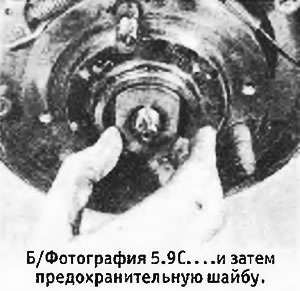
10. In Peugeot workshops, a special tool is used to tighten the nut. You can do without it if you do the following.
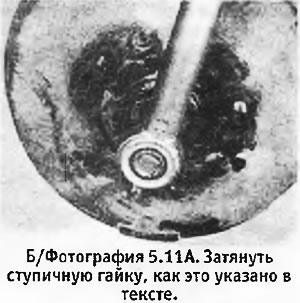
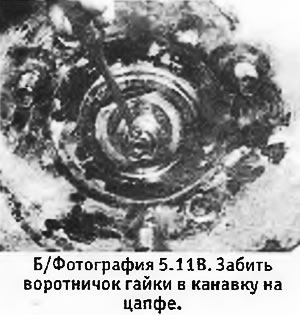
11. Install the brake drum with two countersunk head mounting screws. While turning the drum, tighten the hub nut to the initial torque (see Specifications). Loosen the nut and, rotating the drum again, tighten the nut to the final torque. Stop rotating the drum without touching the nuts. Press the brake pedal two or three times to adjust the rear brakes (before doing this, you should check that the brake drum on the second wheel is in place). After this, apply the handbrake to lock the brake drum for the next operation. Carefully mark the position of the nut relative to the journal and then loosen it by 30° (equivalent to turning the nut halfway on one of its edges), holding the nut in this position, use a suitable punch and hammer to drive its collar into the groove on the journal in order to lock the nut (see photos).
 |
 |
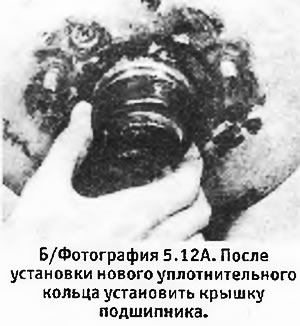
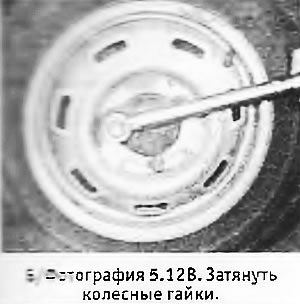
12. If not already done, install a new O-ring onto the bearing cap mounting flange on the hub and install the cap. Install the wheel without tightening the nuts yet. Once the vehicle is lowered to the ground, tighten the wheel nuts to the specified torque (see photos).
 |
 |
You can find the original on the page: peugeotbook.ru