
English Русский
Български
Беларускі
Український
Српски
Hrvatski
Română
Polski
Slovenský
Magyar
Bookmark Articles Sitemap Contacts
Company Hyundai Company Opel Company Skoda Company Kia Company Mitsubishi Company LADA Company Audi
PeugeotBook.ru


Series 100   Series 200   Series 300   400-500   Series 600   Crossovers   Others
 
Partner I (1996-2008) Peugeot 807 (2002-2014) Peugeot 806 (1994-2002) Peugeot J5 (1981-1993)

High-pressure fuel pump DPC (Peugeot J5)

  • Main
  • Пежо
  • Peugeot J5 (1981-1993)
  • Diesel engine
  • Fuel injection (U25)
  • High-pressure fuel pump DPC
0
Table of contents: Accelerator cable 🠇 Adjusting the engine stop speed…🠇 Idle speed adjustment 🠇 Adjusting the engine stop speed 🠇
These pumps have been installed on naturally aspirated and turbodiesel engines since May 1987. On the latest models, the pump was modified twice during production, but its installation was not changed.

All pumps are adjusted in the same way.

Increased idle speed - engine is cold (see Figure 372)
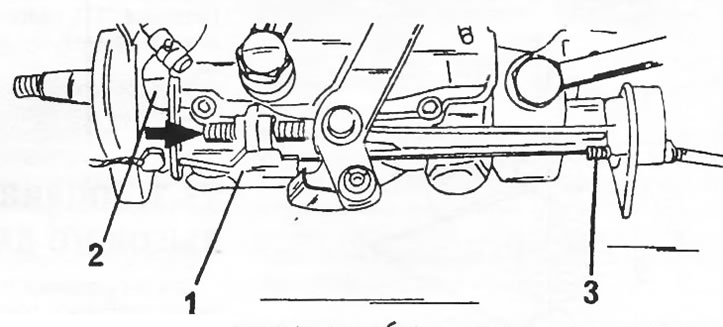
Figure 372. To adjust the increase in idle speed on a cold engine (References to digital…

Figure 372. To adjust the increase in idle speed on a cold engine (References to digital designations are given in the text).

  • On a cold engine, check whether the cable (1) is taut and whether the lever (2) rests against the stop when pressing the lever in the direction of the arrow. If necessary, adjust the tension of the cable (1) using the nut (3). Tighten the cable sheath accordingly.

Increased idle speed - engine is hot (see figure 373)
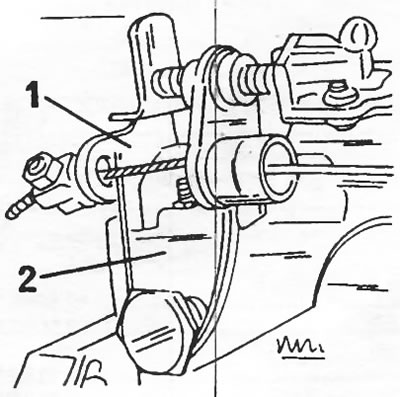
Figure 373. To adjust the increase in idle speed on a warm engine (References to digital…

Figure 373. To adjust the increase in idle speed on a warm engine (References to digital designations are given in the text).


  • Warm up the engine to operating temperature and check that the idle speed increase control cable (1) in Figure 372 is loose (This is a cable controlled by the idle speed increase device thermostat.). The lever (1) in Figure 373) must rest against the part (2) of the pump,
  • If something is wrong, you need to check the thermal capsule. When the engine is cold and warm, and when the cable is disconnected, there should be a difference in cable tension of at least 6 mm. If this is not the case, the thermal capsule in the cylinder head may be defective.

Accelerator cable


Turn off the engine. Have an assistant fully depress the accelerator pedal and check that the lever (1) rests against the stop (2). If it doesn't, adjust the accelerator cable at location (A) by moving the clamp at the end of the cable.

Check that the idle lever (1) is on the stop (3) and that the cable is not taut. Otherwise, adjust the gas pedal stop.

Adjusting the engine stop speed (residual fuel volume)


When adjusting, the engine must be warm.
  • Move the lever (6) in different directions until you find a position in which you can insert a 3.0 mm diameter drill into the hole in the lever, as shown in Figure 371.
  • Start the engine and insert a feeler gauge or washer 1.5 mm thick between the lever (1) and the stop screw (3).
  • Loosen the lock nut (7) in Figure 374.
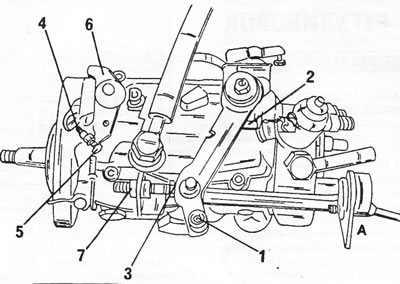
Figure 374. To adjust the increase of the high pressure fuel pump. (References to digital…

Figure 374. To adjust the increase of the high pressure fuel pump. (References to digital designations are given in the text).
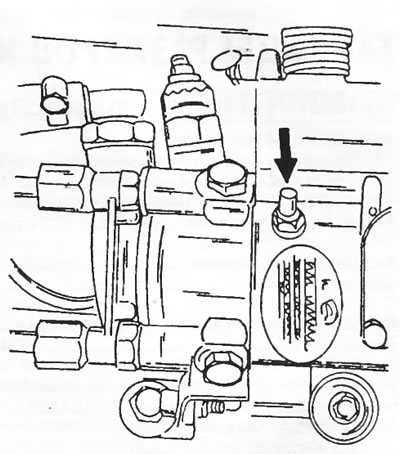


Figure 375.

Figure 375.

  • Turn the screw (3), setting the speed to 800 ±50 rpm. Tighten the lock nut (7). Remove the drill and washer or feeler gauge.

Idle speed adjustment


  • Adjust the idle speed with screw (5) in Figure 374 after loosening the lock nut (4). The engine should run at 775–825 rpm. When adjusting, aim for 800 rpm. Tighten the lock nut.
  • Check that after adjustment the lever is on the stop.

Data published on the website PeugeotBook

Adjusting the engine stop speed


  • Increase engine speed to 3000 rpm and release the accelerator lever.
  • If the engine goes to idle too quickly (the engine almost stalls), loosen the stop screw (3) of the lever (1) by a quarter of a turn.
  • If the engine reaches idle speed too slowly, tighten the stop screw (3) a quarter of a turn.
  • In both cases, check again and, if necessary, adjust the idle speed, as it could definitely have been knocked off during adjustments.
This article is available at russian, bulgarian, belarusian, ukrainian, serbian, croatian, romanian, polish, slovak, hungarian
Article reviewed by editor: Bespalov Alexey
Share information:
Previous
Peugeot J5: Fuel injection (U25)
Next

High-pressure fuel pump DPA MA300
High-pressure fuel pump DPA UT100
Adjusting the high-pressure fuel pump
Glow plugs
Injectors — checking, removal and installation
Removal air from the fuel injection device
See similar information for other Peugeot models

➨ Fuel pump — testing, removal and refitting Peugeot 106 (1991-2003)
➨ Replacing the high pressure fuel pump (EP6DT engines) Peugeot 207 (2006-2014)
➨ High pressure fuel pump Peugeot 306 (1993-2002)
➨ Removal and installation the high pressure fuel pump Peugeot 405 (1987-1997)
➨ High pressure fuel pump — removal, installation and adjustment Peugeot 605 (1989-2000)
Link to this article in different formats
Comments and feedback from visitors
No comments yet


Add two numbers 39 + 45


Partner I (1996-2008) 
  • General information
  • Introduction to the guide
  • Faults en route
  • Weekly checks
  • User manual
  • Maintenance (petrol)
  • Maintenance (diesel)
  • Power unit
  • Petrol engines
  • Diesel engines «XUD»
  • Diesel engines «DW»
  • Overhaul of petrol engines
  • Overhaul of diesel engines
  • Cooling and heating
  • Power and exhaust (petrol)
  • Power and exhaust (XUD diesels)
  • Power and exhaust (DW diesels)
  • Emission reduction
  • Starting and charging system
  • Transmission
  • Clutch
  • Mechanical gearbox
  • Drive shafts
  • Chassis, running gear
  • Brake system
  • Car suspension
  • Steering
  • Body and interior
  • Exterior (external elements)
  • Interior (internal elements)
  • Doors, locks and windows
  • Electrical equipment
  • Equipment and devices
  • Electrical circuits
Peugeot 807 (2002-2014) 
  • General information
  • Operating instructions
  • Maintenance
  • Troubleshooting
  • Power unit
  • Gasoline engines
  • Diesel engines
  • Cooling and heating
  • Fuel injection (petrol)
  • Fuel system (diesel)
  • Fuel system
  • Exhaust system
  • Ignition system
  • Transmission
  • Clutch
  • Manual gearbox
  • Automatic gearbox
  • Chassis, running gear
  • Brake system
  • Car suspension
  • Steering system
  • Body and interior
  • Exterior (external elements)
  • Interior (internal elements)
  • Electrical equipment
  • Power devices
  • Electrical circuits
Peugeot 806 (1994-2002) 
  • General information
  • User manual
  • Maintenance
  • Power unit
  • Petrol engines
  • Diesel engines
  • Lubrication system
  • Cooling system
  • Fuel injection (petrol)
  • Fuel system (diesel)
  • Ignition and exhaust systems
  • ECM Bosch Motronic MP 3.2
  • ECM Magneti-Marelli (MM)
  • Transmission
  • Clutch
  • Mechanical gearbox
  • Chassis, running gear
  • Brake system
  • Car suspension
  • Steering
  • Electrical equipment
  • Equipment and devices
  • Electrical circuits
Peugeot J5 (1981-1993) 
  • General information
  • Introduction to manual
  • Specifications
  • Gasoline engine
  • Engine repair
  • Lubrication system
  • Cooling system
  • Fuel system
  • Ignition system
  • Diesel engine
  • Engine repair (DB9)
  • Lubrication system (DB9)
  • Cooling system (DB9)
  • Fuel injection (DB9)
  • Engine repair (U25)
  • Lubrication system (U25)
  • Cooling system (U25)
  • Fuel injection (U25)
  • Transmission
  • Clutch
  • Gearbox
  • Drive shafts
  • Chassis, running gear
  • Steering system
  • Car suspension
  • Brake system
  • Electrical equipment
  • Power devices
  • Electrical circuits
PeugeotBook.ru © 2018–2026 | Mobile version | Sitemap: EN BG BY UA RS HR RO PL SK HU | Write message | Site search | Add to bookmarks | Peugeot owners
106 (1991-2003) | 206 (1998-2012) | 207 (2006-2014) | 305 (1977-1989) | 306 (1993-2002) | 307 (2001-2008) | 405 (1987-1997) | 406 (1995-2004) | 605 (1989-2000) | Partner-I (1996-2008) | Eurovans-807 (2002-2014) | Eurovans-806 (1994-2002) | J5 (1981-1993) |
Cookies are used to ensure the correct display of pages on the site.