



- turn off the ignition and disconnect the ground wire from the battery;
Note: The automatic transmission is sealed, so it is not necessary to drain the oil when removing and installing it.
- the gearbox is removed upward from the engine compartment;
- place the car on a lift;
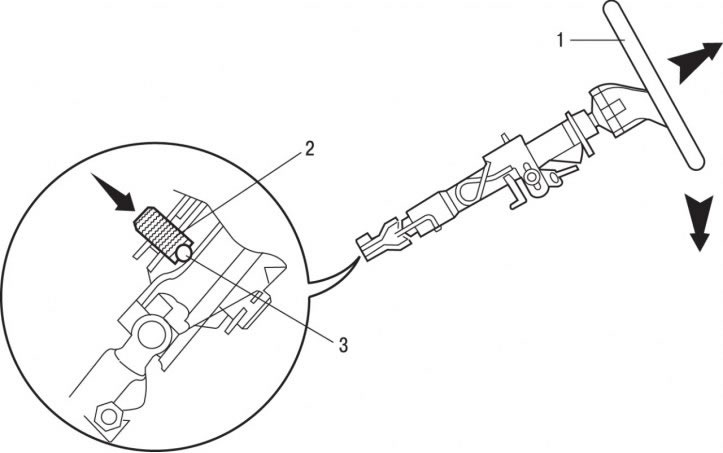
Figure 5.49. Removing the steering column (the direction of movement is indicated by arrows): 1 - steering column; 2 - button; 3 - steering shaft universal joint indicator
- install steering wheel 2 (figure 5.49) to the lowest position and move it as far back as possible;
- remove the engine subframe;
- press button 1 on the universal joint indicator 3 of the steering shaft to lock the steering column in a fixed position;
- unscrew the left axle shaft mounting nut;
- lift the car;
- remove the exhaust system;
- using a bracket, secure the steering unit to the panel;
- remove the left axle shaft;
- disconnect the inner joint of the right axle shaft from the gearbox and, using soft wire, hang it from the body;
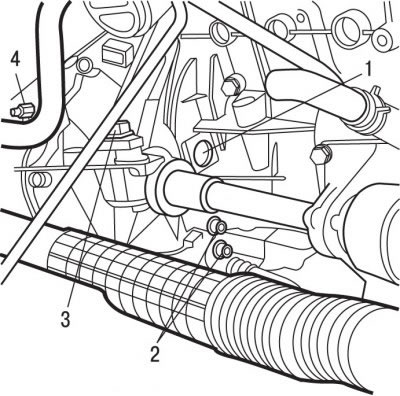
Figure 5.50. Removing the electrical connector: 1 - plates; 2 - bolts; 3 - electrical connector; 4 - nuts
- unscrew bolts 1, nuts 3 (figure 5.50);
Caution! When removing the exhaust system, protect the connecting element in the front exhaust pipe from any mechanical damage and contact with any corrosive products. The connecting element in the front exhaust pipe must not be bent more than 20° in the rotation angle or displaced by 20 mm in the axial direction and 25 mm in the radial direction, otherwise it will be damaged. After servicing and repairing the exhaust system, check that the system is installed freely, without tension, with sufficient clearance relative to the body elements.
- disconnect electrical connector 2;
- remove plate 4 covering the drive hole;
- remove the speed sensor;
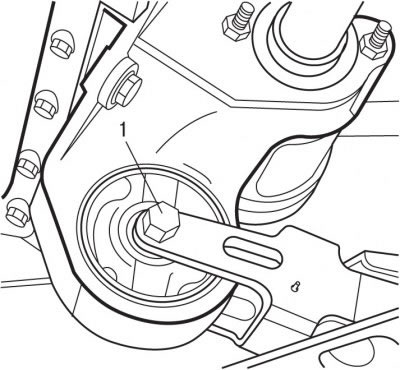
Figure 5.51. Location of the support mounting bolt (1)
- unscrew the nut, remove the bolt and remove support 1 (figure 5.51);
- unscrew the starter mounting bolts, move it to the side along with the wires and secure it to the body with soft wire;
- remove the engine subframe shock absorber;
- unscrew the lower bolts securing the gearbox to the engine;
- lower the car;
- disconnect the pipes from the air filter;
- remove the air filter;
- remove the resonator;
- remove the decorative battery cover;
- remove the left front wheel arch mudguard;
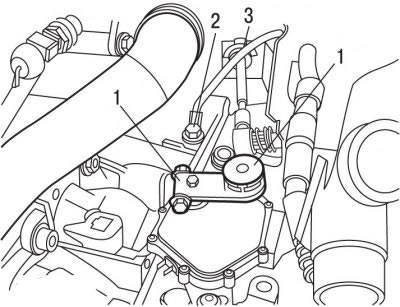
Figure 5.52. Ball joint location: 1 - ball tip; 2 - bolt; 3 - cable stop
- unscrew bolt 1 from under the left front wheel arch (figure 5.52) battery support fastenings;
- remove the battery;
- remove the battery support;
- unscrew bolt 2;
- using a ball joint remover, remove the ball end of the 1 cable;
- use a screwdriver blade to remove the stop 3 from the cable sheath;
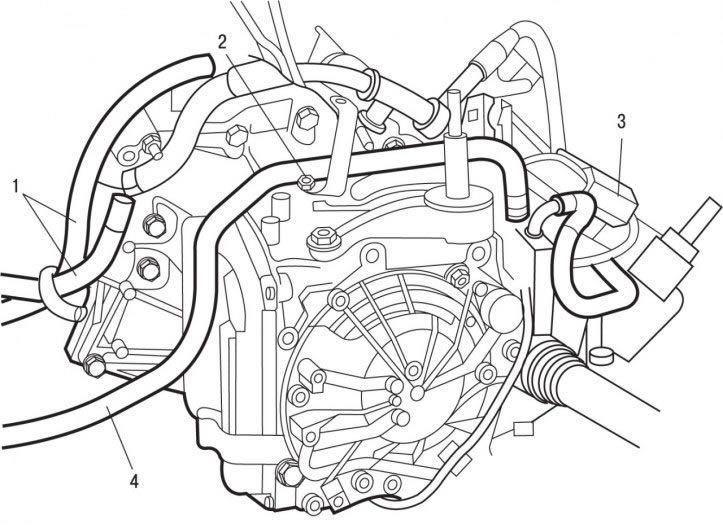
Figure 5.53. Hoses arrangement: 1, 4 - hoses; 2 - support; 3 - connecting nut
- use special clamps to clamp hoses 1 and 4 (figure 5.53);
- unscrew the support mounting bolts 2;
- loosen the clamps and remove hoses 1 from the fittings;
- release the wire harnesses from the clamps and move them away from the gearbox;
- unscrew the connecting nut 3;
- install the 0009 support crossmember to support the power unit;
- hook the crossmember support clamp onto the engine lifting bracket;
- hook the lifting mechanism cable hooks to the gearbox;
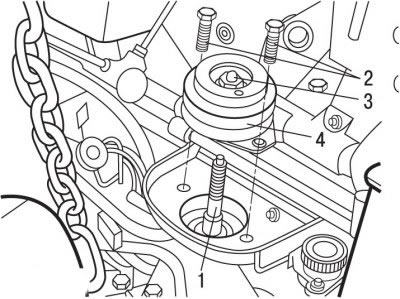
Figure 5.54. Elastic support fastening elements: 1 - axis; 2 - bolts; 3 - nut; 4 - elastic support
- unscrew nut 3 (figure 5.54) fastenings of the elastic support and remove it together with the washer;
- unscrew the 2 bolts securing the elastic support;
- remove elastic support 4;
- use special bushing 0317-AB to remove the gearbox suspension axle;
- supporting the gearbox, unscrew the upper bolts securing the gearbox to the engine;
- move the gearbox away from the engine and remove it from the guide pins. After sufficient clearance has been created, secure the torque converter to the gearbox using tool 0338-D or 0338-S;
- carefully remove the gearbox.
Installation is carried out in the reverse order of removal, taking into account the following:
- when installing the gearbox, it is necessary to replace the self-locking nuts and bolts, as well as the sealing rings and gaskets with new ones;
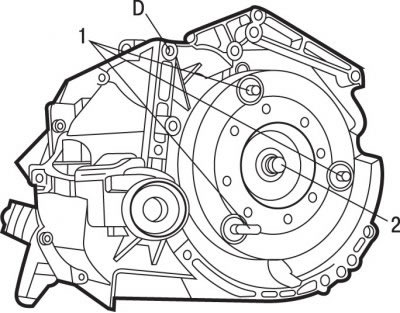
Figure 5.55. Location of fastening elements of the 0338-A gearbox with TU3JP and TU5JP4 engines: 1 - centering pins; 2 - feed pin; D - place where MOLYCOTE BR2 grease is applied to the front cone of the gearbox
- when installing, check the presence of centering pins 1 (figure 5.55) or 3 (figure 5.56), determining the relative position of the engine and gearbox;
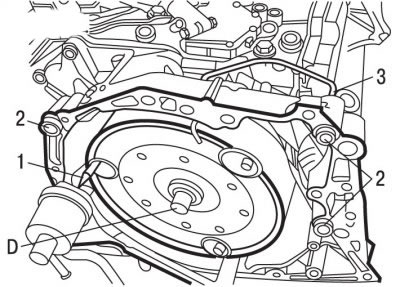
Figure 5.56. Location of fastening elements of the 0338-A gearbox with the EW10J4 engine: 1 - feed pin; 2 - centering pins; 3 - hairpins; D - place where MOLYCOTE BR2 grease is applied to the front cone of the gearbox
- install pin 2 on the gearbox torque converter (see Figure 5.55) or 1 (see Figure 5.56) for gearbox supply 0338-A;
- remove tool 0338-D or 0338-S that holds the torque converter on the gearbox;
- on the gearbox installed with the EW10J4 engine, remove stud 3 (see Figure 5.56), holding the torque converter;
- apply MOLYCOTE BR2 grease to the front cone of the torque converter D (see figure 5.55, 5.56);
- align pin 0338-A to gearbox feeder to drive plate 4 (see Figure 5.50);
Caution! When installing the gearbox, be careful not to deform the plate.
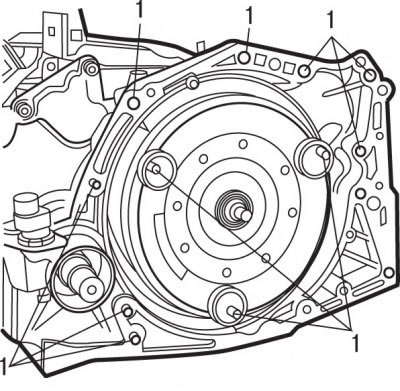
Figure 5.57. Location of gearbox bolts (1) and torque converter mounting nuts (2)
- screw in the top bolts 2 (figure 5.57) gearbox mounts to the engine and tighten them to a torque of 52 N·m;
- remove the device holding the torque converter;
- screw in the 3 bolts securing the gearbox to the engine;
- remove pin 0338-A for gearbox connection to plate;
- screw in the lower bolts 1 securing the gearbox to the engine and tighten them to a torque of 52 N·m;
- screw in the 4 torque converter mounting nuts. Tighten the nuts one by one to a torque of 10 N·m, then tighten them in the same sequence to a torque of 30 N·m. Make sure there is no play along the entire mating surface;
- apply to the thread of axis 1 (see Figure 5.54) lOCTITE FRENETANCH locking compound for gearbox mounts, preventing them from loosening;
- screw in the gearbox suspension axle with the washer and tighten it to a torque of 50 Nm;
- install the elastic gearbox mount;
- screw in the bolts securing the elastic mount of the gearbox suspension, tightening them by hand at this stage;
Caution! Before tightening the elastic mount mounting bolts, center the power unit.
- install the washer and tighten the nut 3 securing the gearbox suspension axle;
- tighten bolts 2 to a torque of 30 Nm and nut 3 to a torque of 65 Nm;
- further installation is carried out in the reverse order of removal, taking into account the following;
- install the drive shafts;
- install the sub-engine frame;
- check the gearbox oil level;
- check the coolant level;
Important! If you replace the AL4 gearbox, update the oil ageing counter database using the DIAG 2000 diagnostic tool.
- connect the ground wire to the battery;
- initialize all computers;
- perform the accelerator pedal position learning process.
The source is located on the website www.PEUGEOTBOOK.ru