



Since the variable intake valve lift system does not require a throttle valve to control the amount of air supplied, the valve's function is reduced to constantly maintaining a vacuum of 50 mbar in the intake manifold, which is necessary to release fuel vapor and oil vapor from the adsorber system.
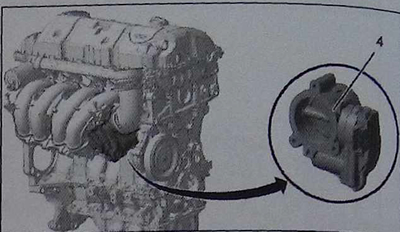
In addition, the throttle valve is used in emergency engine operation mode in the event of a malfunction of the valve lift control system.
The throttle valve operating modes are shown in the following figure.
When the ignition is off, the emergency mode spring holds the throttle valve in the open position (view "C").
When the ignition is turned on, the engine ECU moves the throttle valve to the idle position, overcoming the force of the emergency mode spring (type "D").
When the engine is idling, the throttle valve moves to provide the required amount of air to the engine (replacing the idle speed control motor with a stepper motor).
Starting from 1500 rpm, the engine ECU moves the throttle valve to the other side, assisting the spring (type "E").
The throttle position is monitored by the engine ECU via a potentiometer integrated into the throttle body.
The engine ECU turns off the power supply to the throttle valve unit when certain faults occur.
Purpose of the throttle body connector contacts:
- contact 1 - 5V power supply;
- contact 1 - signal 2;
- contact 1 - "ground";
- contact 1 - signal 1;
- contact 1 - "positive" command;
- contact 1 - "negative" command.
(Data published on the website peugeotbook.ru)