English Русский
Български
Беларускі
Український
Српски
Hrvatski
Română
Polski
Slovenský
Magyar
Bookmark Articles Sitemap Contacts
Company Hyundai Company Opel Company Skoda Company Kia Company Mitsubishi Company LADA Company Audi
PeugeotBook.ru


Series 100   Series 200   Series 300   400-500   Series 600   Crossovers   Others
 
Peugeot 305 (1977-1989) Peugeot 306 (1993-2002) Peugeot 307 (2001-2008)

Fuel tank — general information (Peugeot 305)

  • Main
  • 30X
  • Peugeot 305 (1977-1989)
  • Power unit
  • Fuel system (gasoline)
  • Fuel tank — general information
0
Fuel tank — general information


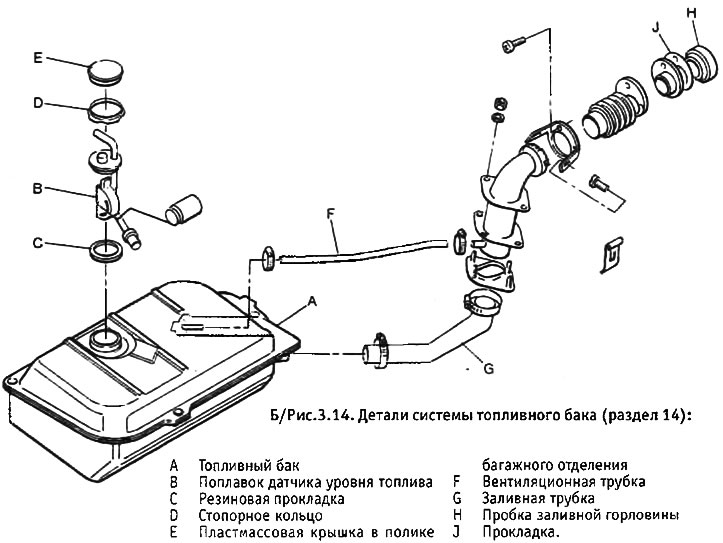
1. The fuel tank is located under the bottom between the rear wheels. The fuel tank system details are shown in B/Figure 3.14.

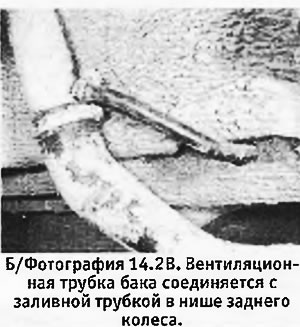
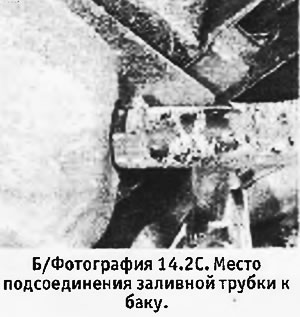
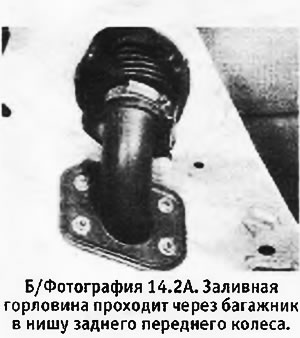
2. Before removing the tank, drain as much fuel as possible from it. To access the fuel supply hose and fuel level sensor, you need to remove the plastic cover in the luggage compartment floor. Disconnect all wires, tubes and hoses from the tank (see the attached drawing and photographs), unscrew the tank mounting screws, pull it out of the support flanges and remove it from the car (see photos).
2. Before removing the tank, drain as much fuel as possible from it. To access the fuel supply hose…

2. Before removing the tank, drain as much fuel as possible from it. To access the fuel supply hose…


3. Do not attempt to repair the tank yourself unless you are sure that it does not contain any fuel or fuel vapor. Before repair, the tank must be steam cleaned, so it is best to entrust its repair to a specialist.


Unleaded fuel


1. Models with XU5S engine can run on unleaded fuel (with an octane rating of 95) provided that the ignition is done 2° later.

2. All other engines run only on leaded fuel (with an octane rating of 97). Using unleaded fuel may damage the valve seats.
This article is available at russian, bulgarian, belarusian, ukrainian, serbian, croatian, romanian, polish, slovak, hungarian
Article reviewed by editor: Ostrovsky Fedor
Share information:
Previous
Peugeot 305: Fuel system (gasoline)
Next

Choke Cable — removal and installation
Gas pedal cable — removal and installation
Carburetor — disassembly, cleaning and assembly
Carburetor — removal and installation
Carburetor — accelerator pump (checking and adjustment)
Intake air heating system
Exhaust system — general information
Diagnostics of fuel and exhaust system faults
See similar information for other Peugeot models

➨ Fuel tank — removal and refitting Peugeot 106 (1991-2003)
➨ Removal and installation the fuel tank (all engines) Peugeot 207 (2006-2014)
➨ Fuel level sensor in the tank Peugeot 405 (1987-1997)
➨ Fuel tank — removal and installation Peugeot 605 (1989-2000)
➨ Fuel tank cap Peugeot 806 (1994-2002)
Link to this article in different formats
Comments and feedback from visitors
No comments yet


Add two numbers 49 + 20


Peugeot 307 (2001-2008) 
  • User manual
  • Keys, doors and alarm
  • Controls and instruments
  • Driving and operation
  • Maintenance
  • Power unit
  • Petrol engines TU3 and TU5
  • Petrol engines EW10
  • Diesel engines DV10
  • Diesel engines DW10
  • Transmission
  • Clutch and drive shafts
  • Mechanical gearbox
  • Automatic gearbox
  • Chassis, running gear
  • Front suspension
  • Rear suspension
  • Steering
  • Brake system
  • Body and interior
  • Exterior (external elements)
  • Interior (internal elements)
  • Doors, locks and windows
  • Heating and air conditioning
  • Electrical equipment
  • Equipment and devices
  • Power devices
  • Airbags
  • Electrical circuits
Peugeot 306 (1993-2002) 
  • General information
  • Introduction to manual
  • Specifications
  • Gasoline engine
  • Engine repair
  • Lubrication system
  • Cooling system
  • Fuel injection
  • Ignition system
  • Diesel engine
  • Engine repair
  • Lubrication system
  • Cooling system
  • Fuel injection
  • Transmission
  • Clutch
  • Gearbox
  • Drive shafts
  • Chassis, running gear
  • Steering system
  • Front suspension
  • Rear suspension
  • Brake system
  • Electrical equipment
  • Power devices
  • Electrical circuits
Peugeot 305 (1977-1989) 
  • General information
  • Maintenance
  • Power unit
  • Gasoline engines
  • Diesel engines
  • Cooling system (gasoline)
  • Cooling system (diesel)
  • Fuel system (gasoline)
  • Fuel system (diesel)
  • Ignition system
  • Transmission
  • Clutch
  • Mechanical gearbox BB8
  • Mechanical gearbox BE1
  • Automatic gearbox ZF4
  • Shafts, hubs and wheels
  • Chassis, running gear
  • Brake system
  • Car suspension
  • Steering
  • Body and interior
  • Exterior (external elements)
  • Interior (internal elements)
  • Electrical equipment
  • Equipment and devices
  • Headlights and lighting
  • Power devices
  • Electrical circuits
  • Wiring diagrams (diesel)
PeugeotBook.ru © 2018–2026 | Mobile version | Sitemap: EN BG BY UA RS HR RO PL SK HU | Write message | Site search | Add to bookmarks | Peugeot owners
106 (1991-2003) | 206 (1998-2012) | 207 (2006-2014) | 305 (1977-1989) | 306 (1993-2002) | 307 (2001-2008) | 405 (1987-1997) | 406 (1995-2004) | 605 (1989-2000) | Partner-I (1996-2008) | Eurovans-807 (2002-2014) | Eurovans-806 (1994-2002) | J5 (1981-1993) |
Cookies are used to ensure the correct display of pages on the site.