



- Using Figure 158, turn the locking ring (2) on the water hose half a turn to the left so that the bar is on the stop (1).
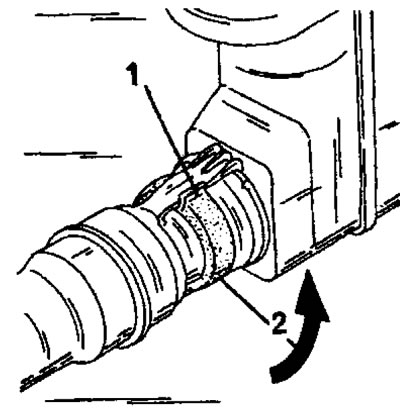
Figure 158. To disconnect the water hoses from the radiator, first turn the locking ring (2) to the left until the tongue (1) rests against the stop.
- Press the lock in the direction of the arrow (Figure 159) until the retainer tongue (1) is released. After this, disconnect the hose from the radiator.
- Clean both parts thoroughly and install a new O-ring on the hose fitting.
- Turn the locking ring (2) in Figure 158 half a turn to the right and insert the hose into the radiator nipple.
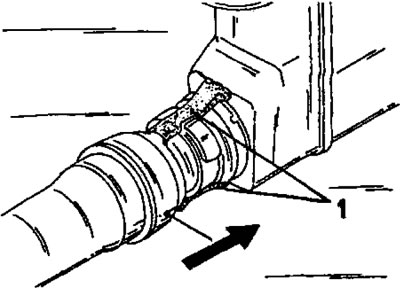
Figure 159. Two clamp tabs (1) secure the hose locks on the radiator.
Press the hose lock until both locking tabs snap into place. At the same time, check how the O-ring fits.
Pull the hose until the locking tabs (1) in Fig. 159 click into place.
The radiator is removed as follows:
- Disconnect the ground wire from the battery.
- Remove any parts that interfere with access to connection points.
- Drain the coolant from the cooling system as described in section 4.1.
- Remove the cross member from the top of the radiator grille and the radiator grille.
- Unscrew the radiator mounting bolts on the crossmember.
- Remove the radiator fan complete with the radiator frame and pull the radiator fan beam forward.
- Disconnect the upper and lower water hoses from the radiator as described above. Also disconnect the ventilation pipe from the radiator.
- Disconnect the wire from the temperature switch on the bottom of the radiator and unscrew the temperature switch, as it may interfere when removing the radiator.
- After this, carefully remove the radiator from the engine compartment, without hitting it against any parts in the engine compartment.
(The source is located on the website: peugeotbook.ru)
The radiator is installed in reverse order. Screw the drain plug back in. Lubricate the threads of the temperature switch with sealing compound and screw the switch into the radiator. When replacing a radiator, all suspension parts are transferred from the old radiator to the new one. Finally, fill the system with coolant as described in section 4.1. Start the engine and check for leaks in the cooling system. To do this, place the car on a dry surface so that you can immediately identify any leaks by the drops on the ground.
When replacing a radiator, the water hoses should be carefully checked. The hoses should not be hardened, let alone torn. Cracks easily form at the locations where the mounting clamps are installed. Such hoses then burst when the maximum pressure in the system is reached.
If a hose leaks while you're on the road, wrapping some adhesive tape around the damaged area can temporarily help. But since such a bandage cannot withstand the pressure existing in the cooling system, it is necessary to tighten the system plug until the first click so that the pressure can be released. While continuing to drive, constantly monitor the temperature gauge on the instrument panel.
Don't forget that due to special locks, no hoses can be connected to the radiator.