



- The cooling system has two separate plugs, both of which must be opened. First, open the expansion tank cap, and then open or unscrew the cap on the bottom of the radiator. There may be a small drain plug fitting on the radiator. In this case, it is necessary to attach a small hose to drain the liquid into a container placed underneath. The engine should not be hot when opening the plugs. The liquid is drained into a container placed underneath. When changing the coolant, the lower water hose should be disconnected from the engine. The work is done in the open air. The drained liquid is disposed of in accordance with the instructions.
- To drain the coolant from the engine, open the plug on the cylinder block.
- Loosen the expansion tank mount and drain the coolant from the tank. Temporarily place the expansion tank aside in the engine compartment.
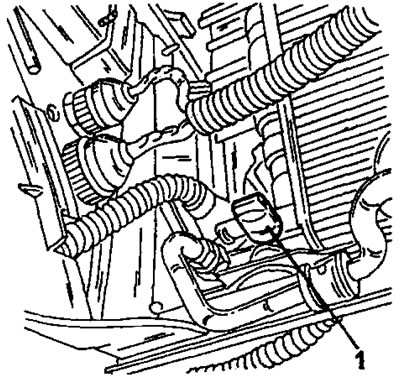
Figure 155. The radiator drain plug (1) is located in the indicated location (here on the TU type engine). Sometimes there is a small nipple on the tap.
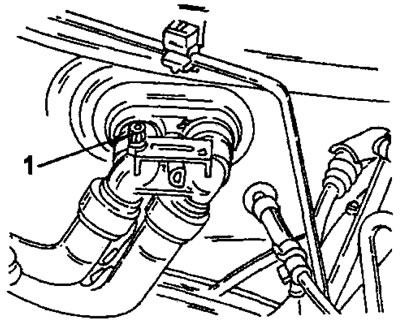
Figure 156. All engines have an air release valve (1) at the connection point of the heater hoses
If the coolant has been used in the engine for a long time, it is necessary to flush the cooling system. To do this, connect a water hose to the radiator opening. Run water through the hose until clean water begins to flow out of the plug holes and the lower radiator nipple.
- Prepare the antifreeze mixture based on the expected outside temperatures. A mixture of 35% antifreeze and 65% water is suitable for operation at normal sub-zero temperatures (down to approximately -15°C). A mixture of 50% antifreeze and 50% water ensures cooling system operation at temperatures down to -35°C. When purchasing antifreeze, specify that it is suitable for use in engines with aluminum cylinder heads and aluminum cylinder blocks.
- Tighten both drain plugs or connect the radiator hose. It is essential to ensure sealing.
- Open the air release valves. On all engines, one valve is located in the location shown in Figure 156. The second valve is located in the engine compartment, but in different places on different engines. On TU type engines it is located to the left of the air intake fitting, and on XU type engines it is located to the right left of the air intake fitting. Do not unscrew the lid.
- Reinstall the expansion tank if it was removed.
- Pour coolant into the expansion tank opening until a continuous stream appears from the air release valve opening. After this, close the valve.
- Check again that the drain plugs and air bleed valves are closed. If the air bleed valve screws are loose, the engine cannot be started.
- Start the engine and let it run at 1500 to 2000 rpm until the fan turns on and then off (or fans). After this, let the engine idle for about another minute.
- Turn off the engine and wait about 10 minutes. Check the coolant level in the expansion tank and tighten the cap on the tank (Figure 157). The coolant level in the expansion tank should reach the "Max" mark. If not, top up with coolant.
[Original can be viewed at: peugeotbook.ru]
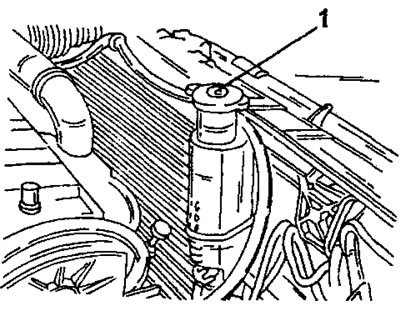
Figure 157. The coolant level is visible on the expansion tank. Open the cover (1) only when the engine is cold.