



Table of contents: Viscosity and specifications 🠇 Motor oil additives 🠇 Mixing oils 🠇 Checking the engine oil level 🠇 Changing the oil and oil filter 🠇
Viscosity and specifications
At the manufacturer's plant, the engine is filled with a special high-quality all-season oil, which is suitable for use at any time of year, with the exception of particularly cold climate zones.
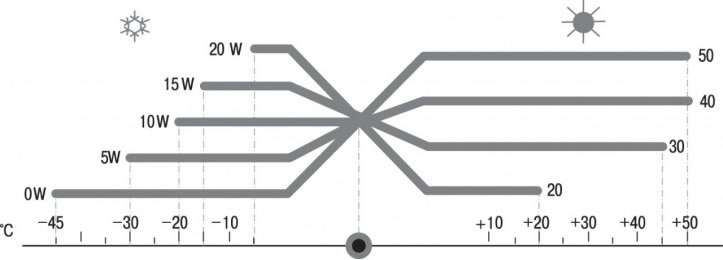
Figure 2.5. Use of motor oils depending on their viscosity and temperature
The oil viscosity grade should be selected in accordance with the optimum oil viscosity for the range of prevailing ambient temperatures shown in the figure 2.5. If the air temperature is only briefly outside the temperature range shown in the figure, the oil should not be changed.
It is also possible to use high quality synthetic oils. If semi-synthetic or synthetic oils are not available, API SH/SJ standard oils for gasoline engines or CD/CF standard oils for diesel engines can be used, provided the "Severe Duty" maintenance plan, which provides for shorter periods between oil changes, is followed.
Caution! Due to their specific viscosity-temperature properties, seasonal oils generally cannot be used year-round and should therefore only be used in appropriate climate zones.
When using all-season 5W30 oils, prolonged engine operation at high speeds and constant heavy engine loads should be avoided.
In all cases, the selected engine oil must meet the vehicle manufacturer's requirements.
Motor oil additives
Do not add friction-reducing additives to motor oil.
To avoid engine failure or exhaust gas aftertreatment system failure, it is prohibited to use any additives to motor oil.
Mixing oils
This and similar questions are of interest to many car enthusiasts. Unfortunately, it is impossible to mix oil, even if it is the oil of "world-famous" companies (Shell, Mobil, British Petroleum). Each company produces commercial oils, adding a whole range of additives to the oil base, the chemical composition of which is kept secret. Therefore, when mixing high-quality oils of the same purpose, manufactured in accordance with the requirements of existing motor oil classification systems, but using technologies from different companies, low-quality oils may be obtained due to incompatibility of additives. Oils from different companies are interchangeable; engine manufacturers often indicate the possibility of using such oils. But this does not mean that they can be mixed. The API and ACEA classification systems require mandatory identical testing methods (laboratory, bench-scale, motor, etc.) for oils from different companies. If desired (or necessity) automakers may introduce additional testing (or more stringent conditions) oils.
The same applies to mixing mineral or synthetic oils (sometimes even from the same company). Synthetic oils, such as hydrocarbon oils, from the same company can be mixed. In this case, the oil manufacturer provides appropriate recommendations and bears responsibility. Unfortunately, it is not uncommon for mixing oils to deteriorate their quality.
Under no circumstances should imported and domestic oils be mixed, especially with the addition of domestic additives.
Checking the engine oil level
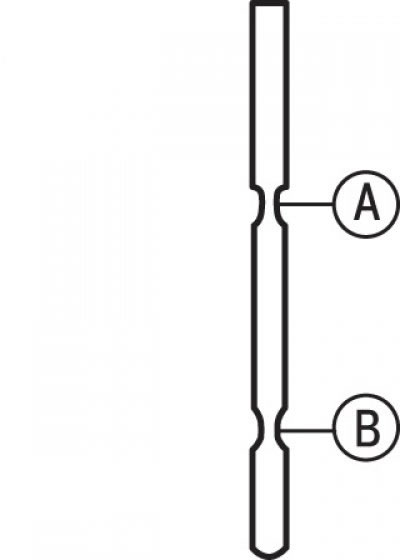
Figure 2.6. Engine oil level indicator (dipstick): A - maximum level; B - minimum level
Check your engine oil level regularly. If necessary, top up the engine oil to the normal level between changes (maximum oil consumption per 1000 km can be up to 0.5 l.). The oil level should be checked on a cold engine, when the car is on a horizontal surface, using the level indicator in the instrument cluster or using the oil level indicator (dipstick) on the engine (figure 2.6). There are two marks on the oil dipstick: A - maximum level; B is the minimum level. The oil level should never exceed the upper mark A on the level indicator (dipstick).
Changing the oil and oil filter
Periodic oil and oil filter changes are the most important preventative maintenance procedure. During operation, engine oil ages—it becomes liquid and contaminated, which leads to premature engine wear.
The oil should be changed immediately after driving, with the engine still warm, so that the oil and any contaminants drain better.
Engine oil changes are carried out in accordance with the maintenance regulations developed by Peugeot.
Replace the oil filter or oil filter element in accordance with the maintenance schedule.
Caution! Avoid prolonged contact of used oil with exposed skin.