



Table of contents: Identification of internal…🠇 Electrical circuit 🠇 Power supply system 🠇 Engine operation 🠇 Checking the common rail fuel…🠇 Checking diesel injectors 🠇 Checking the high pressure fuel pump 🠇 Checking the fuel pressure regulator 🠇
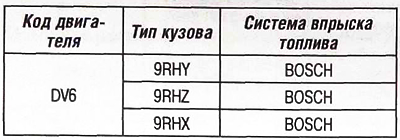
Identification of internal combustion engines
Electrical circuit
Check:
- battery charge;
- trouble codes using a diagnostic tool;
- high fuel pressure value with diagnostic tool (measurement of parameters).
Power supply system
Check:
- the amount of fuel in the fuel tank is not less than 15 liters;
- fuel quality (if you have any doubts about the quality of the fuel, use an additional tank with a filter and fill it with fuel of known origin);
- low pressure fuel system circuit (see the corresponding operation).
Engine operation
Check the camshaft drive (belt drive).
Check all elements that may cause a drop in engine power:
- clogging of the exhaust system;
- clogged air filter.
Checking the common rail fuel injection pressure sensor (the engine does not start)
Disconnect the high fuel pressure sensor connector.
Turn on the starter:
- engine starts - replace high fuel pressure sensor;
- the engine does not start - continue checking.
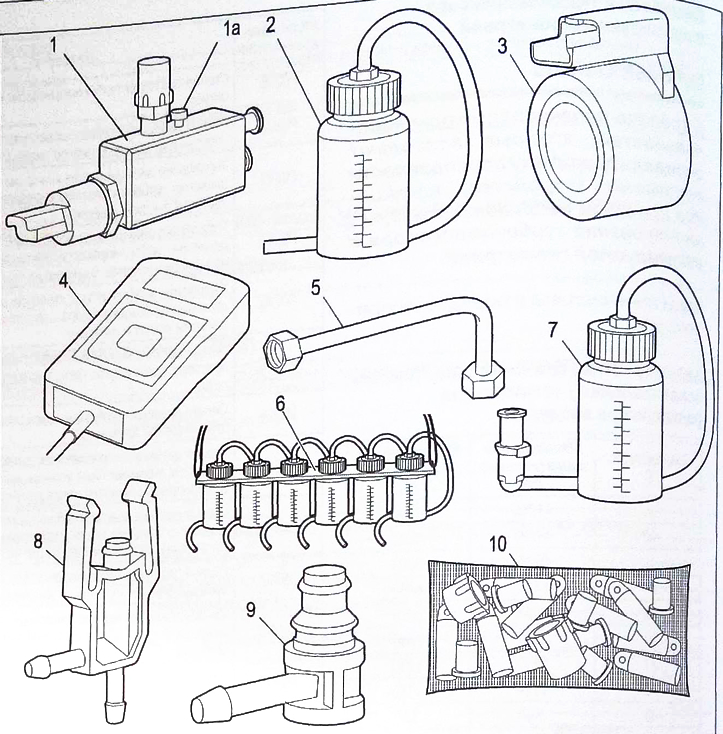
Special devices for testing the high pressure circuit:
1 - High pressure fuel rail replacement 1613.A;
2 - fuel pressure relief device 1613.B;
3 - replacement for electromagnetic feed valve 1613.C;
4 - fuel pressure indicator 1613.D;
5 - high pressure fuel pipe 1613.E1;
6 - vessels for returning fuel from injectors 1613.R;
7 - vessel for measuring the return of the high-pressure fuel pump 1613.G;
8 - nozzle for returning diesel fuel from "DELPHI" 1613.N injectors;
9 - nozzle for returning diesel fuel from injectors "Bosch/Siemens" 1613. J;
10 - set of plugs 1613.K.
Checking diesel injectors
Caution: Do not disconnect the rubber tubes of the fuel return fittings from the injectors.
Disconnect the fuel return fittings from the injectors.
Install the fittings of device 9 onto the diesel injectors.
Connect vessels 6 to the fittings of device 9.
Attach the vessel kit 6 to the engine hood.
Turn on the starter:
- the engine starts - leave the engine idling for two minutes;
- the engine does not start - turn on the starter for 15 seconds.
Please note: The volume of fuel return from diesel injectors is several milliliters, the return increases with increasing wear of the diesel engine.
Replace one or more diesel injectors that are leaking more than others.
Note: After replacing one or more injectors, it is necessary to check them.
If the injectors are working properly, continue checking.
Checking the high pressure fuel pump
Disconnect the camshaft position sensor connector.
Note: Clean the high pressure fuel fittings before disconnecting (see the corresponding operation).
Remove the high pressure fuel line connecting the high pressure pump to the common rail of injectors.
Depending on the type of high-pressure fuel pump, connect tool 1 using the tube of tool 5 or using the previously removed fuel tube.
Attach the vessel of fixture 2 to fixture 1.
Connect fixture 4 to fixture 1.
Click on the check button.
The indicator of the device 4 shows the charge of the battery.
The indicator of the device 4 shows the last value of the fuel pressure (within 5 seconds).
Press the test button and turn on the starter at the same time.
When the message "Stop" appears on the indicator of the device 4, turn off the starter.
The indicator of the device 4 shows the value of the maximum fuel pressure (within 5 seconds).
The indicator of device 4 shows the value of the residual fuel pressure.
Note: The display of device 4 flashes if the fuel pressure is above 50 bar.
If the fuel pressure is above 300 bar: repeat the previously performed checks again.
If the fuel pressure is below 300 bar: continue checking.
Caution: Loosen fuel pressure release screw 1a before disconnecting tool 1.
Checking the fuel pressure regulator
Replace the fuel pressure regulator with a new one.
Perform a high pressure pump check.
If the fuel pressure is above 300 bar: the originally installed fuel regulator is faulty.
If the fuel pressure is below 300 bar: replace the high pressure fuel pump.
Caution: Replace the previously removed high-pressure fuel pipe.
Note: If replacing the high pressure fuel pump, install a new regulator.