



A gasket of the appropriate thickness is installed between the head and the cylinder block. The gasket is made of corrugated sheet metal. The thickness of the cylinder head gasket is selected depending on the amount of piston protrusion above the mating surface.
When removing and installing the cylinder head, Peugeot service centers use the following special tool:
- auxiliary levers for separating the head from the cylinder block - 0188-L;
- dial indicator support - 0110-H;
- indicator head;
- angle tightening key - facom d 360.
Removal
Remove the cylinder head in the following order:
- disconnect the battery;
- remove the decorative cover;
- remove the air cleaner unit with all the wiring;
- remove the air intake distributor;
- remove the exhaust gas recirculation valve tube;
- remove the vacuum pump;
- drain the coolant from the cooling system;
- remove the diesel fuel filter housing;
- remove the mounting clamps, disconnect and move aside the contact connectors and wire harnesses passing in the cylinder head area;
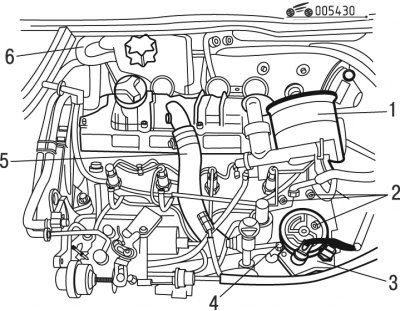
Figure 4.30. Preliminary removal of units and parts: 1 - diesel fuel filter; 2, 4 - bolts; 3 - coolant outlet block; 5 - tubes; 6 - expansion tank
- remove filter 1 (figure 4.30) diesel fuel assembly;
- unscrew bolts 4;
- unscrew bolts 2;
- remove block 3 coolant outlet;
- pick up the phone 5;
- remove expansion tank 6;
- remove the nipple for connecting to the heat exchanger on the cylinder head;
- remove the timing belt of the gas distribution mechanism;
- remove the camshaft pulley;
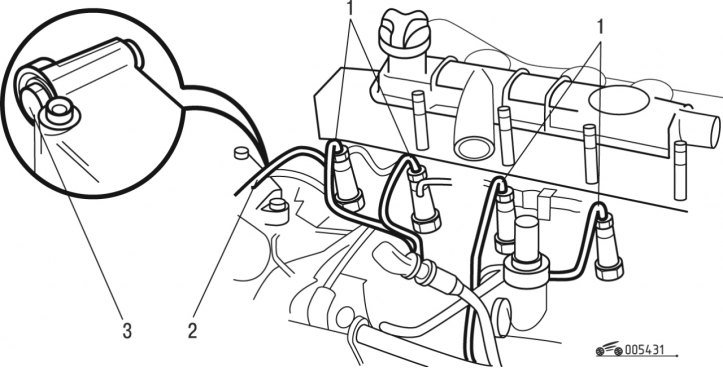
Figure 4.31. Disconnecting the fuel lines: 1 - fuel lines; 2 - fuel return pipe; 3 - bolt
- remove fuel lines 1 (figure 4.31) high pressure;
- unscrew bolt 3;
- remove fuel return pipe 2;
- disconnect the exhaust pipe;
- loosen the cylinder head mounting bolts in a spiral pattern, starting with the outer bolt;
- rock and pull off the cylinder head using levers;
- remove the cylinder head and its gasket;
- clean the seal seating surfaces on the camshaft using an approved cleaner;
Attention! It is prohibited to use abrasive or piercing-cutting devices and tools. The surfaces to be joined must not have any traces of impacts or cracks.
- clean the threaded holes using a M12x150 tap.
Before installing the cylinder head, perform the following work:
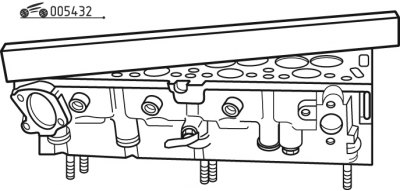
Figure 4.32. Checking the flatness of the cylinder head mating surface
1) check the non-flatness of the mating surface of the head using a device, it should not be more than 0.07 mm (figure 4.32)
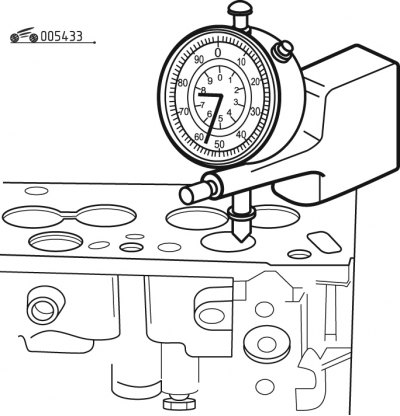
Figure 4.33. Checking the combustion chamber
2) check the protrusion into the combustion chambers using devices, the protrusion should be within (0.015±0.015) mm (figure 4.33);
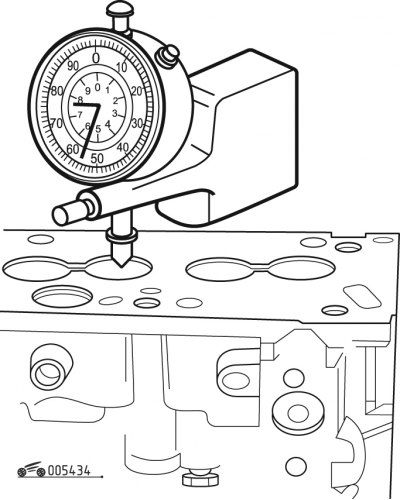
Figure 4.34. Checking the valve recession value relative to the mating surface
3) check the recession of the valve plates relative to the mating surface using devices (figure 4.34), it should be within the range:
- (0.775±0.275) mm for intake valve;
- (1.175±0.275) mm for exhaust valve;
4) select the cylinder head gasket, for which perform the following operations:
- remove the crankshaft locking device;
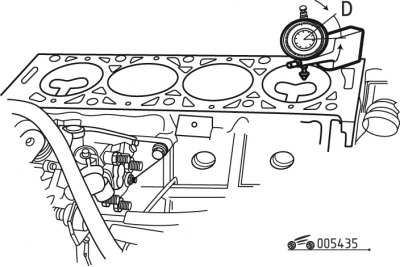
Figure 4.35. Determining the piston protrusion relative to the mating surface
- install a dial indicator on the stand and adjust it to the mating surface (figure 4.35);
- turn the crankshaft using a crankshaft turning tool;
- measure the protrusion of each piston above the block mating surface at top dead center;
- mark the maximum amount of protrusion;
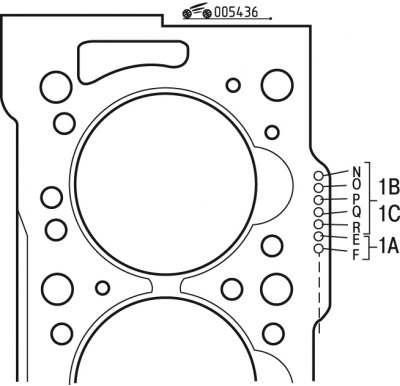
Figure 4.36. Marking of the cylinder head gasket of the DW8 engine (early release models): 1A - engine marking; 1B - nominal thickness; 1C - repair thickness
- select a cylinder head gasket of the appropriate thickness according to Table 4.3.
Table 4.3. Gasket selection for early production models
| Protrusion, mm | Marking |
| 0,56-0,67 | 1 hole |
| 0,68-0,71 | 2 holes |
| 0,72-0,75 | 3 holes |
| 0,76-0,79 | 4 holes |
| 0,80-0,83 | 5 holes |
Note. The marking of gaskets for early models is shown in Figure 4.36. The gasket should be selected in accordance with Table 4.3.
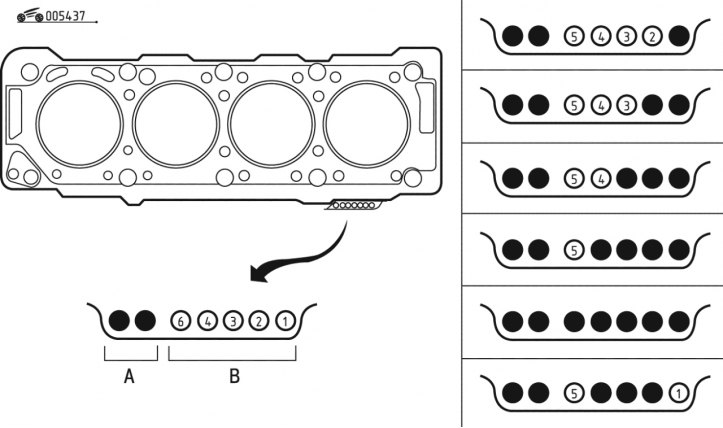
Figure 4.37. Marking of the cylinder head gasket of the DW8 engine (later models): A - engine marking; B - thickness marking
The marking of gaskets for models of recent years of production is shown in Figure 4.37. The gasket should be selected in accordance with Table 4.4.
Identification of cylinder head gaskets for earlier models is shown in Table 4.5.
Table 4.4. Selection of gaskets for later models
| Piston protrusion, mm | Gasket thickness, mm | Number of holes in zone A | Number of holes in zone B |
| 0,51-0,55 | 1,26±0,04 | 2 | 1 |
| 0,55-0,59 | 1,30±0,04 | 2 | 2 |
| 0,59-0,63 | 1,34±0,04 | 2 | 3 |
| 0,63-0,67 | 1,38±0,04 | 2 | 4 |
| 0,67-0,71 | 1,42±0,04 | 2 | 5 |
| 0,71-0,79 | 1,46 0,04 | 2 | 3 |
Table 4.5. Identification of cylinder head gaskets by hole location
| Engine Identification Code | WJZ | WJZ |
| Engine type | DW8 | DW8 |
| Peculiarities | CURTY | ELRING |
| Engine Marking Group (1A) | E-F | E-F |
| 1st nominal size Group (1B) | N | N |
| 2nd nominal size Group (1B) | N-O | N-O |
| 3rd nominal size Group (1B) | N-O-P | N-O-P |
| 4th nominal size Group (1B) | N-O-P-Q | N-O-P-Q |
| 5th nominal size Group (1B) | N-O-P-Q-R | N-O-P-Q-R |
| 1st repair size Group (1C) | - | - |
| 2nd repair size Group (1C) | - | - |
Install the cylinder head in the following order:
- 1) Turn the crankshaft using a crankshaft turning tool;
- 2) fix the flywheel;
- 3) Check for the presence of mounting pins;
- 4) install a new cylinder head gasket;
- 5) Make sure that the camshaft and pulley are in the valve timing position;
- 6) install the cylinder head;
- 7) Clean the threads of the cylinder head mounting bolts with a brush;
- 8) install new washers;
- 9) Apply MOLYKOTE G RAPIDE PLUS grease to the threads and under the bolt heads;
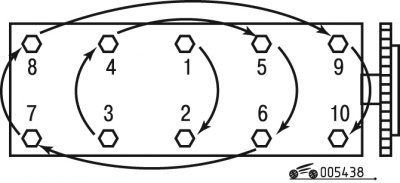
Figure 4.38. Cylinder head bolt tightening sequence
- 10) tighten the head mounting bolts in the sequence shown in Figure 4.38, in three stages:
- pre-tightening torque 20 Nm;
- tightening torque 60 Nm;
- turn it 180° using the tool;
- 11) Install the camshaft pulley, tightening the bolts to a torque of 23 Nm;
- 12) install the timing belt of the gas distribution mechanism;
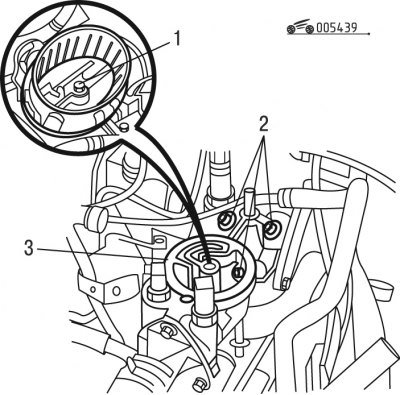
Figure 4.39. Installing the liquid drainage unit: 1, 2 - bolts; 3 - liquid drainage block
[Original publication on the website peugeotbook]
- 13) install block 3 (figure 4.39) drain with a new sealing gasket, tightening the 2 mounting bolts to a torque of 14 Nm;
- 14) Install the new diesel fuel filter assembly with a new O-ring, tightening bolt 1 to a torque of 18 Nm.
Proceed with installation in the reverse order of removal, performing the following tasks:
- connect and secure the wiring harnesses, fittings and cables attached to the cylinder head in the clamps;
- remove air from the fuel system;
- fill the engine cooling system and bleed air from it;
- perform programming of all electronic devices.